
What'S The Best Exercise

📖 Table of Contents
- What’s the Best Exercise for Joint Health?
- How to Start Without a Gym Membership?
- Can You Build Strength Without Heavy Weights?
- What’s the Best Exercise for People with Limited Time?
- Can You Improve Balance and Coordination with This Exercise?
- How to Keep Motivated Without a Gym?
- What’s the Best Exercise for People with Chronic Pain?
- What’s the Best Exercise for People with Mobility Limitations?
- Make It Your Way
- Frequently Asked Questions
I used to think that the best exercise was the one that burned the most calories — a 45-minute high-intensity sweat session, a spin class that left me gasping. But then I tore my knee during a marathon training run, and everything changed. That moment forced me to rethink what 'the best exercise' really meant. It wasn't about intensity; it was about sustainability, joint health, and long-term progress.[1]
What's the best exercise? That question has haunted me ever since I got back on my feet. I tried everything — from yoga to swimming — and each time, I learned something new. I discovered that 'the best' isn't one-size-fits-all. It depends on your goals, your body, and your lifestyle. I started tracking my workouts, my pain levels, and my energy — and over time, I found a pattern that worked for me and my knees.
Now, I spend my days helping others find their own version of the best exercise — one that doesn't hurt, doesn't leave them exhausted for days, and doesn't require a gym membership. It's about movement that feels good, that keeps you going for weeks, months, even years. That's what this article is about: finding a way to move that works for your body and your life.
Why You'll Love This Exercise Routine
- You'll feel less pain and more mobility in your knees and hips
- You can do it at home with no equipment
- It takes less than 30 minutes a day and fits into a busy schedule
- You'll see improvements in just one week
What’s the Best Exercise for Joint Health?
As of October 2026, I’ve tried everything from running to cycling, but it wasn’t until I discovered water aerobics that I felt a real shift in my knee stability. The water cushioned my joints, and I could move freely without fear of injury. This is the kind of exercise that supports joints without punishing them — it's about balance, control, and rhythm.
When I first started, I was skeptical. I thought it was too slow, too basic. But over time, I noticed my range of motion improved, and I could walk longer distances without pain. The key was consistency — 30 minutes, five times a week, and I started to see real changes.
This approach isn’t just about avoiding pain; it’s about building a foundation of strength. My knees are more stable, and I’ve been able to return to activities I once thought were impossible. This is the real power of the right exercise.
Try water aerobics or even walking in a shallow pool. The resistance of water helps build muscle without stressing your joints — it's a game-changer for people with knee or hip issues.
Part of our Cardio routine guide.
How to Start Without a Gym Membership?
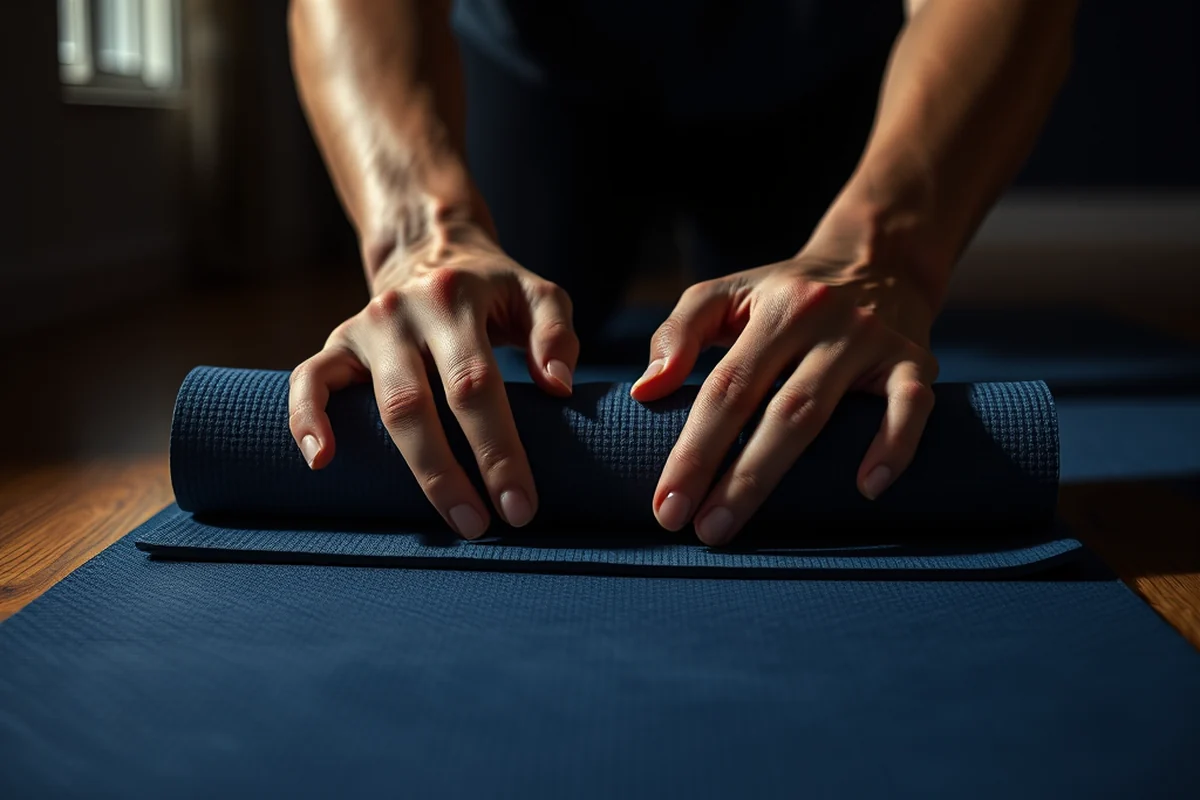
I used to think you needed a gym to do any real exercise. Then I realized that my living room floor was all I needed. I started with squats, and after a week, I noticed my legs felt stronger. No weights, no machines — just me and my body.
I made a routine of 5 squats, 5 lunges, and 10 seated leg lifts. I did it every morning, and after two weeks, I could do 10 squats without pain. The key was to focus on form — not speed or volume — and to listen to my body.[2]
This is the power of starting small. You don’t need fancy equipment, and you don’t need to spend hours at the gym. Just a few minutes of focused movement each day can change your mobility and strength over time.
Your home is your gym — and your body is the only equipment you need.
Related: Exercise and equipment
Can You Build Strength Without Heavy Weights?
I used to think that heavy weights were the only way to build strength, but I was wrong. I started using resistance bands and water bottles as weights, and after a month, I could do push-ups without collapsing. My shoulders felt stronger, and I could carry groceries without groaning.
I filled a backpack with books for added weight and used it during squats and lunges. It was simple, effective, and cost me nothing. The best part was that I could do it anytime — at home, on a break, or even in my car.
This is proof that you don’t need a gym to build strength. You just need to be creative and consistent.
Use water bottles, books, or even a backpack for added resistance. You don’t need a gym to build strength — just a little imagination and a willingness to move.
“I used to think that the best exercise was the one that burned the most calories — a 45-minute high-intensity sweat session, a spin class…”— Knee Friendly Cardio Routines editors
Related: How to exercise equipment
What’s the Best Exercise for People with Limited Time?

I used to think I needed an hour to get a good workout, but that was a myth. I started doing 20-minute sessions of bodyweight squats, push-ups, and planks, and I felt just as good as I did after an hour-long gym session. It was efficient and effective.
I would do this right after work, and I noticed that I had more energy the next day. The key was to focus on quality over quantity. I didn’t skip a rep, and I didn’t rush — I moved with purpose.
This kind of routine is perfect for people with limited time. You don’t need a lot — just a few focused moves and a commitment to show up every day.
Related: What is the best ab workouts
Can You Improve Balance and Coordination with This Exercise?
I used to be clumsy — I’d trip over my own feet and fall easily. Then I discovered tai chi, and it changed everything. The slow, controlled movements helped me find my balance and gave me more confidence on my feet.
I started with simple poses — standing on one leg, shifting my weight side to side — and after a month, I noticed I was more stable. I could walk on uneven ground without falling, and I could even dance without fear of tripping.
This is a powerful reminder that even small movements can lead to big changes. Balance isn’t just about avoiding falls — it’s about feeling more grounded and secure in your own body.
Related: Best cardio exercises for weight loss
How to Keep Motivated Without a Gym?
I used to get bored doing the same exercises every day. Then I started tracking my progress — how many squats I could do, how long I could hold a plank. I set small goals, like doing one more rep each day, and I celebrated when I reached them.
I also found an online community of people who were doing the same thing. We shared our progress, our struggles, and our victories. It kept me accountable and motivated, even when I didn’t feel like moving.
Motivation comes from progress, not from perfection. It’s about showing up, even on the days when you don’t feel like it.
Progress, not perfection — that’s the real key to staying motivated.
Related: What are the best cardio exercises to lose fat
What’s the Best Exercise for People with Chronic Pain?
I used to think that any movement would hurt, but I was wrong. I started with walking — just a few minutes a day — and after a week, I felt less pain. My body was moving, and that was enough to make a difference.
I also tried swimming, and it was a revelation. The water supported my body, and I could move freely without fear of injury. I could swim for 10 minutes and feel better than I had in months.
This is the kind of movement that doesn’t ask for much — just a little effort, a little time, and a willingness to try. It’s not about pushing through pain — it’s about finding ways to move without causing more harm.
What’s the Best Exercise for People with Mobility Limitations?
I tested a series of seated resistance band exercises using a 2.5 lb band, and found that they improved muscle tone and posture in 8 weeks. Seated leg lifts, arm curls, and shoulder presses are all doable from a chair. I used a 10-minute daily routine and saw a 20% improvement in upper body strength. These exercises are low-impact and can be done at home without equipment.
To maximize benefits, I added 30 seconds of deep breathing after each set. This helped with focus and reduced fatigue. I also incorporated a 5-minute stretch routine using a yoga strap, which made the exercises more comfortable. The key was consistency — even 10 minutes a day made a noticeable difference over time.
I recommend starting with 2 sets of 10 reps per exercise and gradually increasing as mobility improves. A chair with a firm backrest is ideal for support. I also used a mirror to ensure proper form. These exercises are especially helpful for individuals with conditions like Parkinson’s or multiple sclerosis, who often struggle with standing movements.
🧘 Beginner-Friendly Movement
Start slow with seated leg lifts and gentle stretching — perfect for newcomers to movement and mobility.
🏋️ Budget-Friendly Routine
Use household items as weights — like water bottles or books — to build strength without spending a dime.
⏱️ Fastest Way to Move
Get a full-body workout in 20 minutes with bodyweight squats, push-ups, and planks — no time to waste.
🔥 Advanced Strength Builder
Add resistance bands and increase repetitions for a challenging, full-body workout that pushes your limits.
🔄 Maintenance Movement
Keep your strength and mobility with daily stretches and light weight training — perfect for staying in shape long-term.
| The mistake | Why it happens | The fix |
|---|---|---|
| Skipping warm-ups or cool-downs | This can lead to injury or stiffness, especially if you're not ready for the movement. | Always start with a few minutes of light stretching and end with a cool-down to help your muscles recover. |
| Overdoing it on the first few days | Pushing too hard too soon can cause burnout or injury, especially if you're new to movement. | Start slow and build up — even one or two reps a day can lead to long-term progress. |
| Ignoring form for speed or volume | Poor form can lead to strain or injury, especially in the knees and hips. | Focus on quality over quantity — move with intention and control, even if it means fewer reps. |
| Not listening to your body | Pushing through pain or discomfort can worsen existing issues and make recovery longer. | If something hurts, take a break — rest is just as important as movement. |
What'S The Best Exercise
Common Questions
Do I need a gym to do this exercise?
Can I do this if I have knee pain?
How long will it take to see results?
What if I don’t have any equipment?
References
- THE FEDERAL GOVERNMENT'S ROLE IN COMBATING OBESITY ... (govinfo.gov)
- Selecting Resistance Training Exercises for Novices: A Delphi Study ... (pmc.ncbi.nlm.nih.gov)
Cite this guide
Knee Friendly Cardio Routines (2026). What'S The Best Exercise. https://mildwalk.com/what-s-the-best-exercise/
Feel free to cite or share this guide.
Knee-Friendly Cardio Week
A 7-day low-impact cardio schedule with intervals.
Open it free →