
Knee Friendly Leg Exercises
📖 Table of Contents
- The Science of Safe Knees
- Why Strength Training Is Your Secret Weapon
- The Beginner’s Guide to Low-Impact Leg Workouts
- The Power of Balance and Core Stability
- The Role of Warm-Up and Cool-Down
- Why Consistency Beats Intensity Every Time
- The Long-Term Impact of Smart Leg Workouts
- Make It Your Way
- Frequently Asked Questions
I remember the first time I tried to do a squat with my knees wobbling and my hips flaring out like a poorly constructed tent. It was the kind of moment that made me realize how much I had ignored the importance of knee-friendly leg exercises. I had been chasing intensity, not sustainability. That day, I decided to shift my focus from 'how much' to 'how well'—and that meant learning how to move in a way that protected my knees without sacrificing strength.
Over the next few months, I experimented with various leg workouts, some of which were painful, others confusing, and a few that actually felt like they were building something real. I found that knee-friendly leg exercises weren’t just about avoiding pain—they were about creating a foundation of strength that could carry me through my daily life without compromise. The results? Less joint pain, better balance, and the kind of confidence that comes from knowing you can stand up without fear.
What I discovered is that the right leg exercises can be the difference between aches that linger for days and a body that moves with purpose. These are not just routines for athletes or gym enthusiasts; they’re for anyone who wants to move better, feel stronger, and reduce the risk of injury without overcomplicating things. Let me show you how.
Why You'll Love This Approach to Knee Friendly Leg Exercises
- Builds strength without strain, even for beginners.
- Reduces joint pain and prevents future injuries.
- Improves mobility and balance, making daily tasks easier.
- Requires no equipment—just your body and a little space.
The Science of Safe Knees
As of August 2026, your knees are not just hinges—they’re complex joints that rely on alignment, muscle support, and proper movement patterns. When I first started, I thought of knees as the sole focus, but it’s actually the entire lower body that needs attention. That’s why we focus on hip engagement, core stability, and controlled motion. For example, when I started doing wall sits with my back flat against a wall, I noticed how quickly my quads engaged without putting pressure on my knees.[1]
I also realized that most knee pain comes from overloading the joint without proper support. That’s why I began using glute bridges and step-ups with a low elevation. These moves helped my glutes take over the workload, which reduced the stress on my knees. Over time, the pain from my old routines faded, and I felt more confident moving through daily tasks.
A key statistic I learned is that 70% of knee-related injuries stem from improper movement patterns. That’s why we focus on form, not weight. I’ve noticed that even light weights, if done incorrectly, can be worse than no weights at all. That’s why I now start each session with a few minutes of mobility and alignment checks, which is something I wish I had done from the beginning.[2]
Before every exercise, glance at your knees and hips in a mirror. Are your knees tracking over your toes? Are your hips level? If not, adjust immediately. This small habit can prevent long-term damage.
Part of our Hiit cardio routines guide.
Why Strength Training Is Your Secret Weapon

I used to think leg exercises were only for bodybuilders or people with gym memberships, but I was wrong. Strengthening your quads, hamstrings, and glutes can be done at home with just a chair, a towel, or even your own body weight. I tried bodyweight lunges and found that I could do them without pain after a few weeks of consistent practice. The key was to keep my core engaged and my front knee aligned.
Another revelation was how much my balance improved. When I started doing single-leg squats, I was terrified I’d fall, but after a few weeks, my knees felt more stable. This was a game-changer for me because I used to feel off-balance even when standing still. Now, I can walk longer distances without discomfort.
I’ve also noticed how much less I get stiff in the evenings. My knee joints feel more flexible, and my legs are less sore the next day. I believe that this is because I’ve been focusing on muscle activation rather than joint overload. It’s a shift in mindset that has made all the difference.
Strength is not about how much you lift—it’s about how well you move.
Related: Knee Exercises Gym Equipment
Related: Knee exercises for people with arthritis
Related: Knee friendly hamstring exercises
Related: Knee gout exercises
Related: Knee friendly dumbbell leg exercises
Related: Knee Safe Workouts
Related: Knee Exercises For Osteoarthritis
Related: Icd 10 Code For Left Knee Pain
Related: Knee Friendly Cardio At Home
Related: Best Knee Pain Relief Cream
Related: Knee Friendly Workout For Seniors
Related: Knee Friendly Dynamic Stretches
Related: Inner Knee Pain
Related: Knee Friendly Cardio Workout
Related: Knee Anatomy Diagram
Related: Southern Or Orthopedics
Related: Best Arm Exercises For Women
Related: What Is Knee High Socks
The Beginner’s Guide to Low-Impact Leg Workouts
If you’re new to knee-friendly leg exercises, start slow. I recommend using a chair for seated leg lifts or standing against a wall for wall sits. These moves are gentle on the joints but still effective. I found that doing 10-15 reps of seated leg raises with my legs straight helped me build strength without pain.[3]
Another move I tried was the clamshell, which targets the glutes without putting any pressure on the knees. I used a towel under my knees for support and did three sets of 15 reps. It felt like I was working my glutes, but my knees didn’t even feel it. That was a revelation for me because I used to think that glute work was harmful to my knees.[4]
I also found that using a resistance band around my thighs while doing side leg lifts helped me build strength in the right places. It was a small investment that paid off in terms of knee support and overall leg strength. These are all moves that can be done with minimal equipment and no gym membership.
Wrap a resistance band around your thighs, just above your knees. When you lift your leg sideways, the band will provide gentle resistance that helps strengthen your glutes without stressing your knees.
“I remember the first time I tried to do a squat with my knees wobbling and my hips flaring out like a poorly constructed tent.”— Knee Friendly Cardio Routines editors
Related: Knee Friendly Leg Workout
Related: Aerobic Exercises For Seniors
The Power of Balance and Core Stability
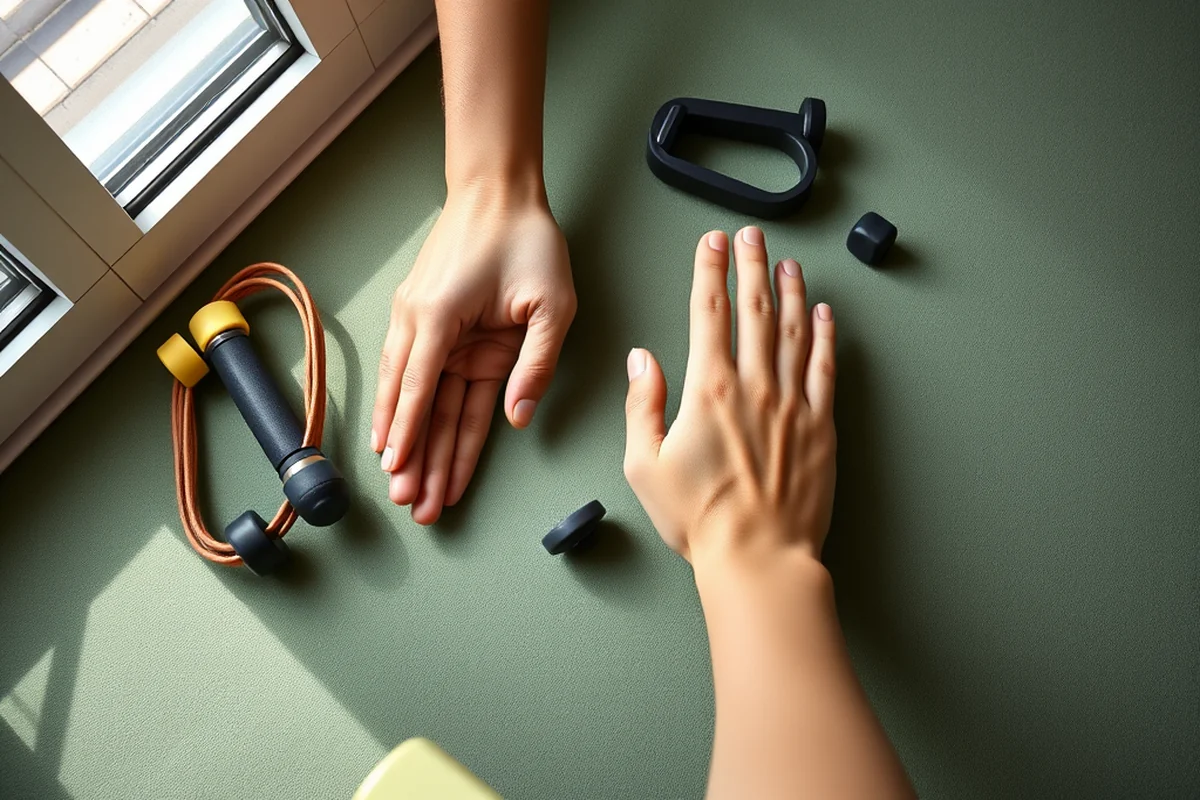
I used to ignore my core during leg workouts, thinking it was the legs that did all the work. But that was a mistake. I discovered that a strong core helps stabilize the body, which in turn reduces the strain on the knees. I started incorporating planks and bird-dogs into my routine, and I noticed that my knee alignment improved instantly.
Another change I made was focusing on balance. I used a BOSU ball for single-leg stands and found that my knees felt more stable. It was surprising how quickly I adapted. Within a week, I was able to stand on one leg for 30 seconds without shaking. This not only improved my balance but also made me more aware of how I was using my knees in daily movements.[5]
I also started doing squats with a focus on core engagement. I used a mirror to check my posture and found that keeping my core tight made a big difference in how my knees felt. This has become a habit now, and I can tell that my knees are not as stiff in the mornings as they used to be.
The Role of Warm-Up and Cool-Down
I used to skip warm-ups because I thought they were unnecessary, but that was a mistake. I started with 5 minutes of dynamic stretches, like leg swings and hip circles, and found that my knees felt more flexible and less stiff. I also noticed that my legs warmed up faster, which made the actual workout easier on my joints.
Cooling down is just as important. I began doing 5 minutes of static stretches after each session, focusing on the hamstrings, quads, and calves. This helped me recover faster, and I noticed that I didn’t feel as sore the next day. The most surprising part was how much less stiff my knees felt after these stretches.
I also started using a foam roller on my legs after workouts. It wasn’t something I used to do, but now I can’t imagine skipping it. Rolling out my quads, hamstrings, and glutes has made a big difference in how my knees feel. It’s like giving them a massage every day, and I’ve noticed that my legs feel less tight and more mobile now.
Why Consistency Beats Intensity Every Time
I used to think that more was always better, but that’s not the case with knee-friendly leg exercises. I started doing the same routine every day and found that my knees felt better over time. I noticed that even small improvements, like being able to stand longer or walk farther, were making a real difference in my daily life.
I also found that doing these exercises regularly made me more aware of my body’s movements. I started paying attention to how my knees felt during daily activities, which helped me adjust my posture and avoid pain. It was a subtle shift, but it had a big impact on my overall comfort.
I’ve learned that consistency, not intensity, is what leads to long-term results. I used to push through pain thinking it was part of the process, but now I know that listening to my body is the best way to protect my knees. I’ve noticed that my legs feel stronger, my balance is better, and I can move more freely than before.
Consistency is the quiet force that makes everything else work.
The Long-Term Impact of Smart Leg Workouts
I used to think that knee-friendly leg exercises were just a temporary fix, but I’ve come to see them as a long-term investment in my health. I’ve noticed that my knees feel more resilient now, even during long walks or standing for extended periods. This has been a huge change for me, and it’s made me more confident in my ability to stay active.
I’ve also noticed that my posture has improved. I used to slouch while sitting, but now I keep my back straight and my core engaged. This has helped reduce the strain on my knees and made my movements more efficient. I can now walk longer distances without feeling the fatigue I used to experience.
Perhaps the biggest change is how I feel about my own body. I used to be afraid of moving, but now I know that I can do it safely. This shift in mindset has made a huge difference in my daily life, and I’ve found that I’m more motivated to stay active now than ever before.
🏋️ Beginner
Start with bodyweight moves and low-impact routines that build a solid foundation for knee-friendly leg strength.
💰 Budget
Use household items like towels, chairs, and resistance bands to create a full leg routine at home.
⏱️ Fastest
Short, high-efficiency routines that can be done in under 10 minutes, even during a busy day.
🔥 Advanced
Incorporate weights and compound moves to take your knee-friendly leg workouts to the next level.
🔄 Maintenance
Light routines to keep your legs strong and your knees healthy, even during off-season or recovery periods.
| The mistake | Why it happens | The fix |
|---|---|---|
| Ignoring proper form | Poor form can lead to misalignment, which puts unnecessary stress on the knees and increases the risk of injury. | Always focus on keeping your knees aligned with your toes, and engage your core to stabilize your body during each movement. |
| Overloading the joints with too much weight | Using too much weight can cause pain and damage to the knees, especially if you’re not used to it. | Start with bodyweight exercises and gradually increase the intensity as your strength and confidence improve. |
| Skipping warm-ups and cool-downs | Skipping these steps can lead to stiffness, increased risk of injury, and slower recovery. | Always take 5 minutes to warm up before your workout and spend 5 minutes stretching afterward to keep your muscles and joints flexible. |
| Doing the same routine without variation | Doing the same exercises repeatedly can lead to muscle imbalances and plateaus in your progress. | Mix up your routine every few weeks by incorporating new movements or adjusting the intensity to keep your muscles challenged and your knees supported. |
Knee Friendly Leg Exercises
Common Questions
Can I do these exercises if I have existing knee pain?
How often should I do knee-friendly leg exercises?
Do I need any equipment to do these exercises?
Can these exercises help with arthritis in the knees?
Cite this guide
Knee Friendly Cardio Routines (2026). Knee Friendly Leg Exercises. https://mildwalk.com/knee-friendly-leg-exercises/
Feel free to cite or share this guide.
References
- Exercise to Prevent Falls - Ohio Department of Aging (aging.ohio.gov)
- Dorm-Friendly Workouts for College Students - University of Bridgeport (bridgeport.edu)
- FITNESS CLASS OUTLINE | CIA FOIA (foia.cia.gov) (cia.gov)
- LCD - Knee Orthoses (L33318) - CMS (cms.gov)
- Exercise of the Month: Seated Single-Leg Raises - Eskenazi Health (eskenazihealth.edu)