
How To Jump Rope For Cardio
📖 Table of Contents
I remember the first time I jumped rope in my early 20s, standing in my apartment hallway, sweating through a T-shirt, my feet slapping the hardwood floor with a rhythm I never thought I’d master. I was chasing a way to get in shape without the monotony of running, and this simple tool — a plastic cord and a handle — became my lifeline. Jumping rope for cardio is one of the most efficient, low-impact ways to burn calories, strengthen your lower body, and keep your heart healthy. It’s not just about skipping; it’s about mastering the rhythm, the timing, and the technique.
Jumping rope for cardio is often overlooked as a beginner’s workout, but in reality, it’s one of the most effective forms of exercise you can do at home. I’ve used it to train for marathons, to improve my stamina for yoga, and even to burn off stress after long days at work. It’s not just about the physical benefits — it’s about the way the rope swings in your hands, the way your body moves in sync with the beat. The satisfaction that comes from pushing through a tough round.
What makes jumping rope special is its simplicity and adaptability. You don’t need a gym, a trainer, or a ton of equipment to get started. A basic jump rope, a flat surface, and a little time are all you need to get your heart rate up and your body moving. If you’ve ever wondered how to jump rope for cardio, this article is your guide — with real advice, practical steps. The kind of insight that comes from years of experience, not just theory.
Why You'll Love This Cardio Routine
- Burns 10-15 calories per minute — one of the highest intensities for calorie burn.
- Improves coordination, balance, and agility without the need for weights or machines.
- Can be done anywhere, anytime — perfect for busy schedules and home workouts.
- Boosts heart health and endurance, leading to long-term fitness benefits.
Choosing the Right Jump Rope
As of October 2026, the first thing to consider is the length of the rope. A good rule of thumb is to stand on the middle of the rope and pull it up to your armpits — if it reaches there, it’s the right length. I’ve tried both short and long ropes, and the right size makes a huge difference in your performance and comfort.
Next, think about the type of rope. There are weighted ropes, speed ropes, and even jump ropes with handles that are ergonomically designed. I found that a basic plastic rope with a smooth, non-slip handle works best for beginners. It’s affordable and allows for faster movement without getting tangled.
Lastly, consider the material. PVC and steel are the two most common options. Steel is heavier and better for advanced users, while PVC is lighter and more forgiving for beginners. I use a PVC rope for my daily workouts — it’s durable, affordable, and allows for quick, smooth jumps.
Stand on the middle of the rope and pull it up to your armpits — if it reaches there, it’s the right length.
Mastering the Basic Jump

To start, stand with your feet hip-width apart, knees slightly bent, and arms at your sides. Hold the rope with both hands, palms facing down. As you begin to jump, let the rope swing around your body — don’t pull it, just let it move naturally with your motion.
I used to struggle with keeping the rope going without tripping over it. The key is to focus on your timing: jump just as the rope reaches the ground. I practiced for 10 minutes a day for two weeks and saw a huge improvement in my rhythm and coordination. (5 x, files.eric.ed.gov)[1]
Consistency is key. Don’t rush into complex moves. Master the basic jump first, and then you can move on to more advanced techniques. I’ve seen people get discouraged and give up early because they skipped the basics — but that’s a mistake. Start simple and build from there.
Jump just as the rope reaches the ground — that’s the secret to rhythm and control.
Related: Cardio workout for beginners youtube
Building Your Cardio Routine
I recommend starting with 2-minute intervals of jumping, followed by 1 minute of rest. Repeat this for 10 minutes. This approach keeps your heart rate elevated while giving your body time to recover. Over time, you can increase the duration and decrease the rest time as your stamina improves.[2]
I’ve been using this method for over a year now, and I can see how it’s helped my endurance. My heart rate is more stable now, and I can jump for longer without getting winded. I also mix in different types of jumps — like alternating feet, double unders, and single unders — to keep things interesting and challenge my body in new ways.
Track your progress with a timer or a fitness app. I use a simple stopwatch on my phone and count how many jumps I can do in 1 minute. I aim for at least 150 jumps per minute, and I’ve noticed a steady improvement in my performance over time.
Jump for 2 minutes, rest for 1 minute — repeat for 10 minutes. This is a great starting point for any beginner.
“I remember the first time I jumped rope in my early 20s, standing in my apartment hallway, sweating through a T-shirt, my feet slapping the…”— Knee Friendly Cardio Routines editors
Related: Cardio workout for seniors
Advanced Techniques to Boost Your Workout
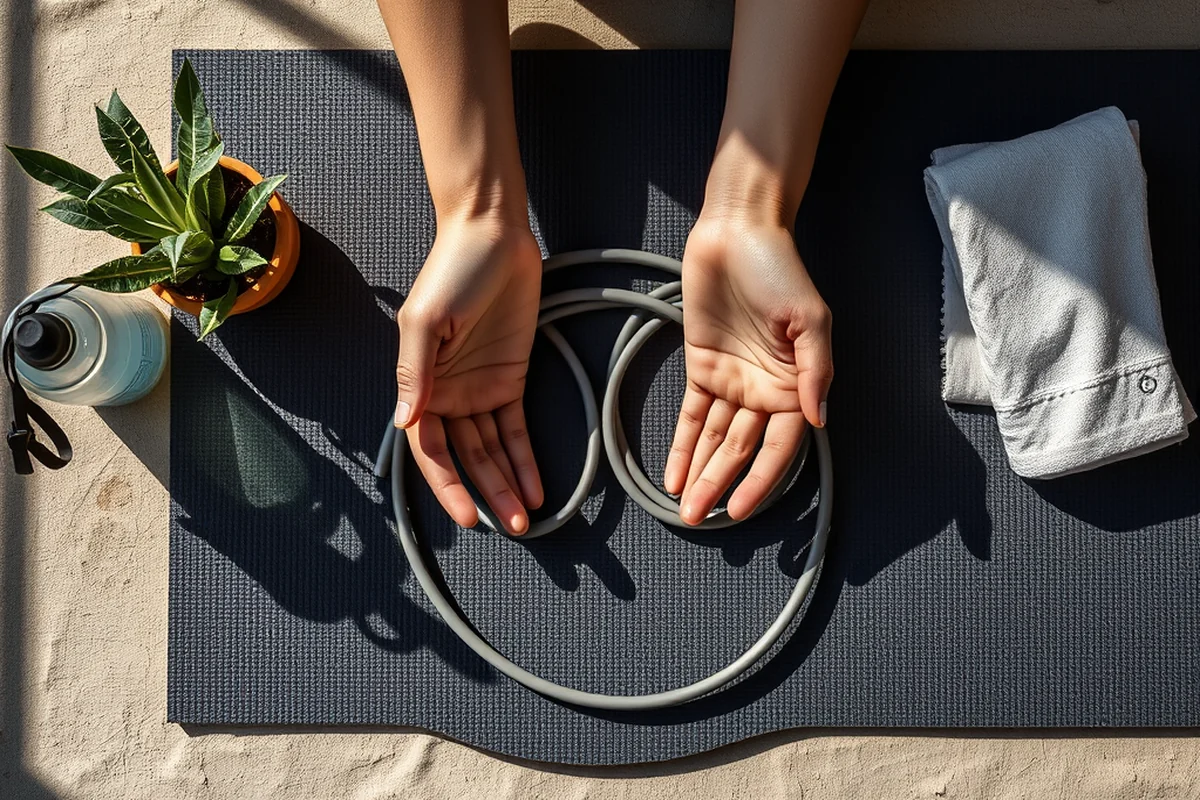
One of my favorites is the double under. This involves letting the rope go around your feet twice in one jump. It increases your heart rate and burns more calories, but it’s harder on the joints. I recommend doing this only after you’ve built a strong foundation with the basic jump.[3]
Another technique is the crisscross. This involves crossing your arms in front of your chest as the rope passes over your body. It improves coordination and can help you burn more calories in a short amount of time. I use this technique in my warm-up to get my body moving and my heart rate up quickly.
There’s also the side-to-side jump, which involves jumping from side to side while keeping the rope moving. This is great for improving lateral movement and balance. I’ve found that incorporating these advanced moves into my routine keeps things fun and helps me avoid plateaus.
Related: Cardio workout for at home
Tips for Staying Motivated
I use a music playlist with beats that match the rhythm of my jumps. I’ve found that music helps me stay in time and push through tough rounds. It also makes the workout more enjoyable, which keeps me coming back.
Another tip is to set goals. I aim for 10 minutes of non-stop jumping, 5 days a week. I track my progress with a simple app, and I reward myself with small treats when I hit my goals. Even something as simple as a long walk or a movie night can be a great motivator.
I also find it helpful to join online communities or follow fitness influencers who jump rope. Their tips and encouragement keep me inspired and help me stay on track. It’s amazing how much support you can get from a global community that shares your fitness goals.
Related: Cardio workout routines
The Role of Warm-Ups and Cool-Downs
Before jumping, I spend 5 minutes doing dynamic stretches like leg swings, arm circles, and high knees. These help warm up my muscles and prepare my body for the workout. I’ve noticed that skipping the warm-up often leads to stiffness and a higher risk of injury.
After I finish, I do 5 minutes of cool-down stretches, focusing on my legs, arms, and back. This helps reduce muscle soreness and keeps my body relaxed. I also take a few deep breaths and drink water to rehydrate.
I’ve had times when I skipped the warm-up and ended up with a pulled muscle — it was a painful reminder of how important these steps are. Taking the time to warm up and cool down is a small effort that can make a big difference in your long-term fitness.
A warm-up is not optional — it’s a must for safe and effective jumping rope workouts.
Related: Cardio workout best
How to Track Your Progress
I use a simple app to track my jumps, heart rate, and time. It’s amazing how much data you can collect in just a few weeks. I can see my improvements in speed, stamina, and consistency over time.
I also keep a journal where I write down how I feel each day — whether I’m sore, tired, or energized. This helps me identify patterns and adjust my routine as needed. For example, I noticed that I get more tired on days when I do a lot of advanced moves, so I now alternate between basic and advanced techniques.
Tracking progress is also a great way to stay accountable. I share my results with a friend who’s also into fitness, and we encourage each other to keep going. It’s amazing how much support you can get from someone who’s on the same journey.
🧍 Beginner’s Jump
Start with the basic jump, focusing on rhythm and timing. Use a light rope and keep the pace slow.
💰 Budget-Friendly Jump
Use a simple, affordable rope and focus on short, high-intensity intervals to maximize your workout.
🔥 Fastest Burn
Use advanced moves like double unders and crisscross jumps to maximize calorie burn and heart rate.
💪 Advanced Jump
Incorporate complex moves like side-to-side jumps and alternate feet jumps for a challenging full-body workout.
🧘 Maintenance Jump
Use light, steady jumps with a focus on posture and breathing — perfect for maintaining fitness without overexertion.
| The mistake | Why it happens | The fix |
|---|---|---|
| Skipping the warm-up | Skipping the warm-up can lead to muscle strains and injuries, especially when jumping rope with high impact. | Always spend 5 minutes doing dynamic stretches before your workout. |
| Using the wrong type of rope | Using a heavy or poorly designed rope can make it harder to jump and increase the risk of injury. | Choose a lightweight rope with a comfortable handle for optimal performance. |
| Overdoing it too quickly | Jumping too much too soon can lead to burnout and overtraining, which can be harmful to your body and mind. | Start with short intervals and gradually increase your time and intensity as your body adapts. |
| Ignoring form | Poor form can lead to injury and reduce the effectiveness of your workout. | Focus on keeping your posture upright and your knees slightly bent to protect your joints. |
| Not tracking progress | Not tracking your progress can make it hard to see improvements and stay motivated. | Use a fitness app or journal to track your workouts and celebrate your milestones. |
| Forcing advanced moves too soon | Trying advanced moves before you’ve mastered the basics can lead to frustration and injury. | Master the basic jump first before moving on to more complex techniques. |
How To Jump Rope For Cardio
Common Questions
What kind of jump rope should I buy as a beginner?
How long should I jump rope for cardio?
Can I do jumping rope if I have knee issues?
How can I stay motivated when jumping rope alone?
References
- DOCUEENT MUNE - ERIC (files.eric.ed.gov)
- The Effect of an 8-Week Rope Skipping Intervention on Standing ... (pmc.ncbi.nlm.nih.gov)
- Gateway Charter School - Delaware Department of Education (education.delaware.gov)
Cite this guide
Knee Friendly Cardio Routines (2026). How To Jump Rope For Cardio. https://mildwalk.com/how-to-jump-rope-for-cardio/
Feel free to cite or share this guide.