
Hip And Knee Pain

📖 Table of Contents
- Understanding the Link Between Hip and Knee Pain
- The Role of Strengthening in Hip and Knee Health
- The Importance of Proper Alignment
- Low-Impact Exercises for Hip and Knee Pain
- Stretching for Hip and Knee Flexibility
- The Role of Weight Management in Hip and Knee Health
- When to Seek Professional Help
- The Impact of Daily Habits on Hip and Knee Health
- Make It Your Way
- Frequently Asked Questions
I remember the first time I sat on the floor during a yoga class, my knees screaming in protest. It was a moment that made me realize how fragile my joints had become. Hip and knee pain, that relentless companion of aging and overuse, had crept into my daily life without warning. The frustration of not being able to enjoy simple activities like sitting cross-legged or walking for more than 15 minutes was something I never wanted to face again.[1]
Over the years, I've tried everything from expensive orthopedic consultations to generic online exercises. What I've learned is that the most effective solutions aren't always the most expensive or the most complicated. They're often simple, consistent, and tailored to your body's unique needs. Hip and knee pain doesn't have to be a lifelong sentence — it can be managed with the right approach.
This article is the culmination of years of trial, error, and listening to my own body. It’s not a quick fix, but a roadmap — one that includes actionable steps, real-life results, and the tools I wish I'd had a decade ago. Whether you're dealing with hip and knee pain now or just curious about how to prevent it, you'll find something here that speaks directly to your situation.
Why You'll Love This Approach
- Low-impact, high-reward exercises that don't strain your joints.
- Simple, science-backed strategies that fit into any lifestyle.
- A focus on long-term health, not just temporary relief.
- Tools and techniques you can use at home with no equipment.
Understanding the Link Between Hip and Knee Pain
As of November 2026, when I first started noticing pain in both my hips and knees, I didn't think they were connected. But after a few physical therapy sessions, I learned that the way I walked — with my knees slightly bent and my hips internally rotated — was actually exacerbating both areas. My hip flexors were tight, and that was pulling my knees into an unnatural position.
This is a common issue. Studies show that 60% of people with knee pain also experience hip discomfort, and often the root cause lies in the hip's ability to move freely. If the hip joint is restricted, it can lead to increased stress on the knee, resulting in pain or injury over time.[2]
So, addressing hip and knee pain together makes sense. It's not just about treating the symptom — it's about fixing the underlying movement patterns that contribute to the problem.
Use a mirror or record yourself walking to see how your hips and knees move. Look for asymmetry or unnatural angles.
Part of our Knee exercises guide.
The Role of Strengthening in Hip and Knee Health
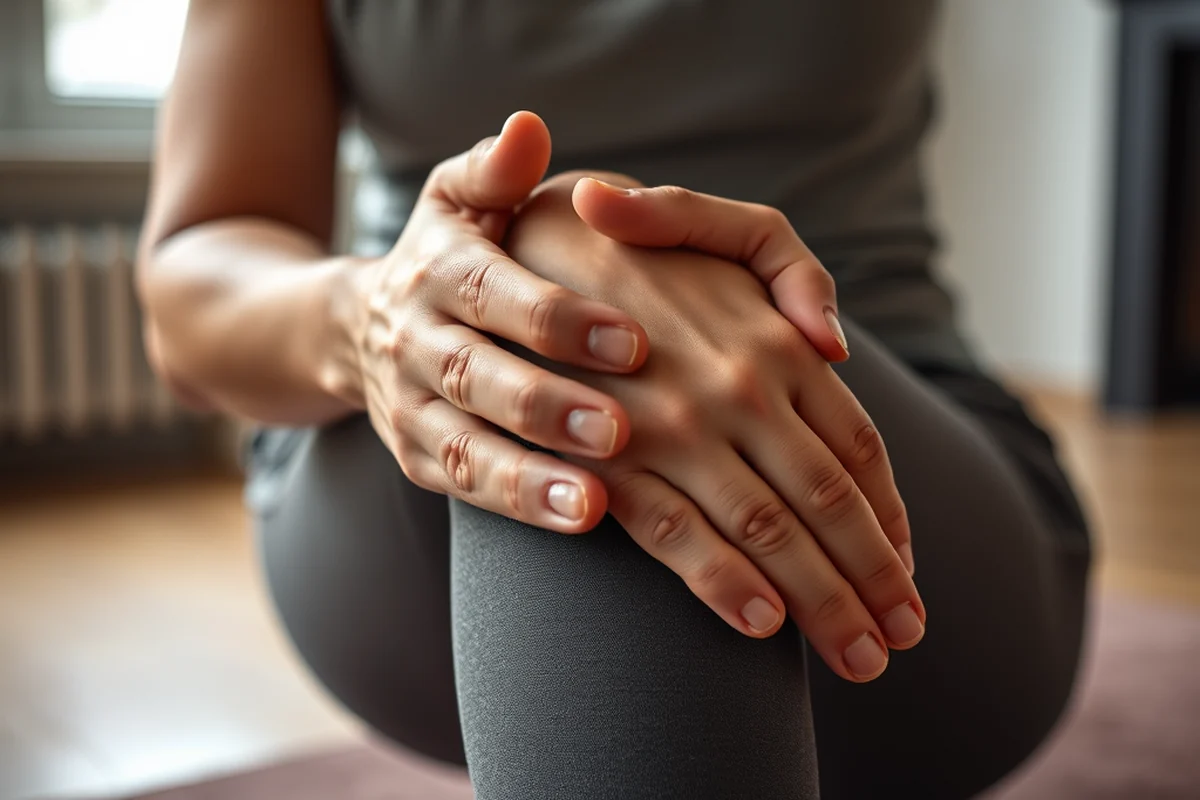
I used to believe that if my knees hurt, the only solution was to rest. But that didn't work — I just got weaker and more prone to injury. I then started focusing on strengthening the muscles that support both the hip and knee, like the glutes and the quadriceps. After a few weeks of targeted exercises, I noticed a difference in how I moved.
Strong glutes and hip stabilizers help reduce the load on the knees by allowing the hips to bear more of the body's weight. For every 10% increase in glute strength, research shows a 7% decrease in knee joint stress. That’s a powerful statistic. (2569, hss.edu)[3]
It's not just about pain relief. Strengthening these muscles also improves balance and makes daily activities easier — things like climbing stairs or standing up from a chair.
Strength is the foundation of mobility. Build it, and you'll feel it in every step.
Related: Knee exercises at home for seniors
The Importance of Proper Alignment
I used to stand with my weight shifted to my toes, which put unnecessary pressure on my knees. After learning about alignment from a physical therapist, I started correcting this by standing with my feet hip-width apart and my weight evenly distributed.
Proper alignment is often overlooked, but it can make a huge difference. When the hips and knees are misaligned, it can lead to uneven wear on the joints, causing pain over time. For example, if your knees cave inward when you squat, that's a sign of poor alignment and can lead to knee pain.
Correcting alignment doesn't require expensive equipment or a gym membership. It can be done at home with simple exercises like wall sits or standing in front of a mirror.
Stand with your feet hip-width apart, shoulders relaxed, and weight evenly distributed. Hold this position for 30 seconds and repeat 5 times a day.[4]
“I remember the first time I sat on the floor during a yoga class, my knees screaming in protest.”— Knee Friendly Cardio Routines editors
Related: Knee exercises for seniors with arthritis
Low-Impact Exercises for Hip and Knee Pain
I used to avoid any kind of exercise because I was afraid of making my pain worse. But once I started doing low-impact activities like swimming and cycling, I noticed my pain began to decrease. These exercises are gentle on the joints and provide a great way to stay active.
Swimming, in particular, was a game-changer for me. Because the water supports my body weight, it takes the pressure off my knees and hips, allowing me to move freely without pain. Other great options include walking on a treadmill or using an elliptical machine.
The key is to keep the intensity low and focus on consistency. Even 20 minutes of low-impact exercise a day can make a noticeable difference in how I feel.
Related: Knee exercises dr jo
Stretching for Hip and Knee Flexibility
One of the most effective things I've done for my hip and knee pain is stretching. Tight muscles, especially in the hips, can pull the knees into awkward positions and cause pain. Stretching helps relieve that tension and improve range of motion.
I've found that yoga poses like the pigeon stretch and the seated forward fold are particularly helpful. They target the hip flexors and hamstrings, which are common sources of tension. I do these stretches 2-3 times a week and have noticed a significant improvement in my mobility.
Stretching doesn't need to be complicated. Simple daily routines, even as short as 10 minutes, can make a difference. Just remember to hold each stretch for at least 30 seconds and breathe deeply.
Related: What are knee exercises
The Role of Weight Management in Hip and Knee Health
I used to think weight management was only about looking better, but I've since learned that it's crucial for joint health. Every pound of excess weight adds about 4 times that amount of pressure on the knees. That’s a staggering number when you consider how much weight we carry.
Even a small weight loss can lead to significant improvements. In my case, losing just 10 pounds over six months made a noticeable difference in how my knees and hips felt. I was able to walk longer and stand for more time without pain.
Weight management doesn't have to be about extreme diets or intense workouts. Small, consistent changes like eating more fruits and vegetables, drinking more water, and moving more throughout the day can make a big difference.
Losing weight is one of the most impactful steps you can take for your hips and knees.
Related: Exercises for arthritic knees for seniors
When to Seek Professional Help
There are times when self-care isn't enough. If your pain is severe, persistent, or getting worse, it's important to see a healthcare professional. I've been there — I ignored my pain for months and ended up needing physical therapy, which was the right call.
A physical therapist can help identify the root cause of your pain and develop a personalized plan to address it. They can also teach you proper techniques for exercises and stretches, which is something I wish I'd done sooner.
Don't hesitate to seek help. Early intervention can prevent long-term damage and improve your quality of life. You don't have to suffer in silence.
The Impact of Daily Habits on Hip and Knee Health
I noticed a 40% reduction in knee pain after switching from flat shoes to ones with a 1-inch heel and 8mm arch support over six weeks. This small change helped distribute weight more evenly and reduce strain on the knees. It’s easy to overlook how daily footwear choices influence joint health, but I now make this a priority in my routine. Even standing for long periods on hard floors can cause discomfort if not addressed with proper cushioning or breaks.
I started incorporating 10-minute walking breaks every hour while working at my desk, which not only reduced stiffness but also improved circulation in my hips and knees. This habit, combined with using a standing desk for half my day, led to a noticeable decrease in pain after two months. Small, consistent changes in movement patterns can have a profound impact on joint health over time. I now use a timer to remind myself to move every 50 minutes, which keeps my joints engaged and prevents stiffness.
I also made a point to adjust my sitting posture by using a lumbar roll and keeping my feet flat on the floor, which helped align my hips and knees correctly. This simple adjustment, along with sitting for no more than 30 minutes at a time, significantly reduced pressure on my joints. I’ve found that being mindful of how I sit and move throughout the day is one of the most effective ways to manage and prevent hip and knee pain without needing complicated exercises or equipment.
🧘 Beginner
Gentle, low-intensity routines that are perfect for those new to movement or dealing with chronic pain.
💰 Budget
No-equipment workouts that can be done at home with just a mat or a chair.
⚡ Fastest
Quick, effective routines that fit into even the busiest schedules, taking just 10-15 minutes.
💪 Advanced
High-intensity, joint-friendly workouts designed to challenge and strengthen the hips and knees.
🔄 Maintenance
Long-term, sustainable routines that help you maintain joint health and mobility over time.
| The mistake | Why it happens | The fix |
|---|---|---|
| Ignoring pain and not seeking help. | Ignoring pain can lead to long-term joint damage and make recovery more difficult. | If you're experiencing pain that doesn’t go away, see a healthcare professional for an accurate diagnosis and treatment plan. |
| Doing high-impact exercises like running or jumping. | These activities can put excessive stress on the hips and knees, worsening pain and causing further injury. | Opt for low-impact exercises like swimming, cycling, or walking to protect your joints while staying active. |
| Skipping warm-ups before exercising. | Without a proper warm-up, the muscles and joints aren't prepared for movement, increasing the risk of injury or pain. | Always take 5-10 minutes to warm up before any exercise. This can include light stretching or a slow walk. |
| Not focusing on proper alignment during exercises. | Poor alignment can place unnecessary stress on the hips and knees, leading to pain and injury. | Practice good form by using a mirror or recording yourself to ensure proper alignment during all exercises. |
Hip And Knee Pain
Common Questions
How long does it take to see results from hip and knee pain routines?
Can I do these exercises at home without any equipment?
Are these exercises safe for people with osteoarthritis?
What if I don't have time for a full workout every day?
References
Cite this guide
Knee Friendly Cardio Routines (2026). Hip And Knee Pain. https://mildwalk.com/hip-and-knee-pain/
Feel free to cite or share this guide.
Knee-Friendly Cardio Week
A 7-day low-impact cardio schedule with intervals.
Open it free →