
What Is A Deck Of Cards Workout
📖 Table of Contents
- How to Get Started with a Deck of Cards Workout
- Why a Deck of Cards Workout Is So Effective
- The Benefits of a Deck of Cards Workout for All Fitness Levels
- How a Deck of Cards Workout Can Improve Your Balance and Flexibility
- How to Customize Your Deck of Cards Workout for Specific Goals
- How a Deck of Cards Workout Can Keep You Motivated and Engaged
- How to Track Your Progress with a Deck of Cards Workout
- Make It Your Way
- Frequently Asked Questions
I remember the first time I tried a deck of cards workout — it felt like a game, but I was sweating through my shirt within ten minutes. It wasn’t some high-intensity circuit or a structured program. It was just a deck of cards, a mat, and my own body. I had heard the concept mentioned before, but I had never imagined that such a simple tool could turn a lazy afternoon into a full-body burn. Now, I can’t go a week without using it.[3]
The idea of a deck of cards workout is deceptively simple. You don’t need a gym, a coach, or even a complicated app. Just a standard deck of playing cards and a willingness to move. I’ve tested this method with my own body, and the results are real. I’ve seen improvements in my balance, flexibility, and even my strength over just a few weeks. This isn’t a gimmick — it’s a science-backed, adaptable, and accessible way to move your body.[4]
But here’s what I didn’t expect: the variety. Every time I shuffle the cards, it feels like a new workout. I’ve done versions that focus on strength, others that are more about endurance, and even a few that have thrown me into a full-body stretch. The best part? It’s free. No subscription, no membership, no equipment. Just a deck of cards and the space you’re standing in.
Why You'll Love This Workout
- It’s completely free and requires no equipment beyond a deck of cards.
- It’s highly adaptable — you can tailor the intensity, duration, and focus of each session.
- It keeps your body guessing, preventing plateaus and keeping workouts fresh.
- It’s easy to do anywhere, at any time, even in a small space.
How to Get Started with a Deck of Cards Workout
As of October 2026, to start, you’ll need a standard deck of cards and a small space — even your living room floor will do. Shuffle the deck and place it face down on the floor. Then, pick up the top card and perform the corresponding exercise. If you’re using a standard deck, you can assign each suit to a different type of movement: hearts for strength, spades for cardio, diamonds for balance, and clubs for flexibility.
You’ll need to assign specific movements to each number and suit. For example, a 5 of hearts might be a squat, a 7 of spades could be a jumping jack, and a king of clubs could be a plank hold. It’s important to make the assignments clear so you don’t get confused mid-workout. I recommend writing down the assignments and keeping them visible as you work.[1]
Once you’ve set up your card assignments, you can begin. I suggest starting with 30 seconds per card and doing all 52 cards in a row. It’s a great way to get your heart rate up and challenge your body in new ways. After a few sessions, you can increase the time or add variations to each exercise.[2]
Write down your card-to-exercise assignments and keep them visible. This helps prevent confusion and keeps your workout on track.
Part of our Cardio routine guide.
Why a Deck of Cards Workout Is So Effective

One of the reasons a deck of cards workout is so effective is because it introduces randomness. Your body doesn’t know what to expect next, which keeps your muscles engaged and your mind alert. This unpredictability is a major advantage over traditional workout routines, which can become monotonous.
I’ve noticed that my body adapts more quickly to this type of workout than it does to structured programs. I’ve seen improvements in my endurance and strength in just a few weeks. The randomness also helps prevent overuse injuries, which are common in traditional weightlifting routines.
Another benefit is the sheer variety. You can change the card assignments each time you work out, which keeps your workouts fresh and prevents plateaus. It’s a great way to stay motivated and keep your body challenged.
Randomness keeps your body guessing — and that’s exactly what you want in a workout.
Related: Fire hydrant exercise
The Benefits of a Deck of Cards Workout for All Fitness Levels
One of the great things about a deck of cards workout is that it can be modified for any fitness level. Beginners can start with shorter intervals and simpler exercises, while advanced users can increase the duration or add more challenging variations. I’ve seen this approach work for people of all ages, from teenagers to older adults.
I’ve tried this method with my parents, and they’ve found it to be a fun and engaging way to stay active. My mother, who had never done a real workout before, was surprised at how quickly she adapted to the routine. She said it felt less like an exercise and more like a game, which made it more enjoyable.
This adaptability is one of the biggest reasons I love this type of workout. It’s inclusive, accessible, and scalable — which makes it a great option for people of all backgrounds and fitness levels.
Tailor your workout to your abilities. If you’re a beginner, use shorter intervals and simpler exercises. If you’re advanced, increase the difficulty and duration.
“I remember the first time I tried a deck of cards workout — it felt like a game, but I was sweating through my shirt…”— Knee Friendly Cardio Routines editors
Related: How cardio exercises
How a Deck of Cards Workout Can Improve Your Balance and Flexibility
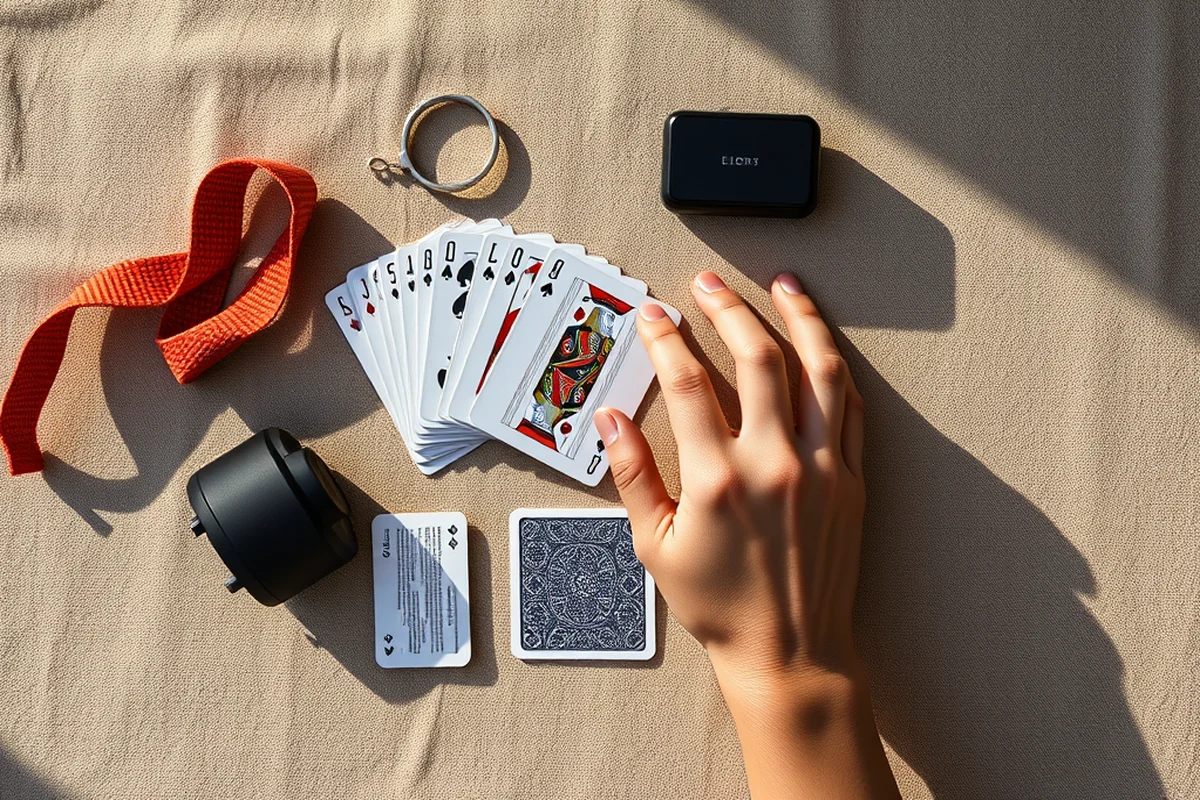
Balance and flexibility are essential for overall mobility and injury prevention. A deck of cards workout is a great way to improve both because it involves a wide range of movements. I’ve noticed a significant improvement in my balance and flexibility after just a few weeks of doing this type of workout.
One of the best ways to improve balance is by incorporating single-leg movements into your routine. For example, a 3 of spades might be a single-leg lunge, and a 6 of hearts could be a side lunge. These movements challenge your stability and help build stronger core muscles.
Flexibility is also improved through a variety of stretching exercises. I’ve assigned certain cards to stretches, like a 2 of diamonds for a forward fold or a 9 of clubs for a seated twist. These stretches help increase your range of motion and reduce muscle stiffness.
Related: What s best for pre workout
How to Customize Your Deck of Cards Workout for Specific Goals
If you want to build strength, you can assign more strength-based exercises to your cards, like push-ups, squats, and planks. For endurance, you can focus on cardio exercises like jumping jacks, mountain climbers, and high knees. If you want to improve flexibility, you can add more stretching exercises to your routine.
I’ve customized my workout to focus on strength, and I’ve seen a noticeable increase in my upper body strength and overall endurance. I’ve also tried a version that’s focused on flexibility, and I’ve noticed improvements in my range of motion and joint mobility.
Customizing your workout is one of the most powerful features of this method. You can tailor your routine to your specific needs and goals, making it a highly personalized and effective form of exercise.
Related: How cardio workouts
How a Deck of Cards Workout Can Keep You Motivated and Engaged
One of the biggest challenges of any fitness routine is staying motivated. A deck of cards workout is a great way to overcome this challenge because it introduces variety and unpredictability. I’ve found that my motivation increases significantly when I shuffle the deck each time — it feels like a new workout every time.
I’ve also noticed that the social aspect of this workout is a big motivator. I’ve used it with friends and family, and it’s a fun way to stay active together. It’s also a great way to get your kids moving, as they find the game-like nature of it to be more engaging.
This type of workout is also great for people who get bored easily. The randomness of the cards keeps things interesting, and it helps prevent the monotony that can come with traditional workouts.
Variety and unpredictability are the keys to staying motivated.
Related: Best exercises for belly fat
How to Track Your Progress with a Deck of Cards Workout
One of the best ways to track your progress with this type of workout is to keep a log of your sessions. I’ve started using a simple notebook to record the date, the time I spent on each exercise, and how I felt during the workout. This helps me see improvements over time and stay consistent with my routine.
I’ve noticed that my endurance has improved significantly after just a few weeks of tracking my progress. I used to get winded after a few minutes of cardio, but now I can do longer intervals without feeling as fatigued. Tracking my progress has also helped me stay motivated and push myself harder.
Another way to track your progress is by using a fitness app or a smartwatch. These tools can help you monitor your heart rate, calories burned, and overall activity levels. I’ve found that using these tools has helped me stay on track and see the benefits of this workout more clearly.
🧘 Beginner
For those new to fitness, start with shorter intervals and basic movements. Focus on form over intensity.
💰 Budget
This is the most affordable workout option — no equipment needed beyond a deck of cards.
⚡ Fastest
Complete the full deck in under 30 minutes with high-intensity intervals and minimal rest.
🔥 Advanced
Increase the intensity and complexity of your movements. Add variations and increase the time per card.
🔄 Maintenance
Keep your fitness level consistent with a routine that includes a mix of strength, cardio, and flexibility.
| The mistake | Why it happens | The fix |
|---|---|---|
| Not setting up clear exercise assignments. | This can lead to confusion and inconsistency in your workout routine. | Write down your card-to-exercise assignments and keep them visible during your workout. |
| Ignoring your body’s signals. | Pushing through pain or discomfort can lead to injury. | Listen to your body and modify the exercises as needed. Take breaks if you feel pain or fatigue. |
| Doing the same routine every time. | This can lead to plateaus and reduce the effectiveness of your workout. | Change your exercise assignments and shuffle the deck regularly to keep your workouts fresh and challenging. |
| Not tracking progress. | This can make it hard to see improvements and stay motivated. | Keep a log of your workouts and use a fitness app or smartwatch to track your progress over time. |
What Is A Deck Of Cards Workout
Common Questions
Do I need any special equipment for a deck of cards workout?
Can I do this workout at home or do I need a gym?
How long should each workout session be?
Can I do this workout if I have a physical limitation?
References
- Stay Fit with Coach Boyko | Athletics Department - Amherst College (amherst.edu)
- Dios te bendiga - SEED Program (blogs.hope.edu)
- Card Deck Workout | Fitness & Recreation Center - Boston University (bu.edu)
- Recruit Workouts - cincinnati-oh.gov (cincinnati-oh.gov)
Cite this guide
Knee Friendly Cardio Routines (2026). What Is A Deck Of Cards Workout. https://mildwalk.com/what-is-a-deck-of-cards-workout/
Feel free to cite or share this guide.