Cardio Exercises In Home
📖 Table of Contents
- Why Your Living Room Is the Perfect Place for Cardio
- The Power of Bodyweight Cardio
- How to Time Your Cardio Routines for Maximum Effect
- The Role of Music in Home Cardio Workouts
- Why You Should Track Your Progress at Home
- How to Stay Motivated When You’re Alone
- How to Overcome Plateaus in Home Cardio Workouts
- Make It Your Way
- Frequently Asked Questions
I used to think that cardio required a gym membership or a running shoe. I’d wake up to the buzz of my phone, read the headlines about how ‘cardio is the key to longevity,’ and then sigh, slipping back into the couch. But then, one rainy afternoon, I found myself in my living room, barefoot, doing jumping jacks. I was frustrated with my body, but also curious. What if I could do cardio without leaving the house? What if I could feel stronger, more alive, and more in control — all from where I stood?
So I started experimenting. I moved furniture out of the way, grabbed a towel to wipe sweat, and began with the simplest of routines: 10 minutes of jumping jacks, 10 minutes of high knees, and 10 minutes of mountain climbers. It didn’t look like much — in fact, it looked like a toddler’s playtime. But the next morning, I felt something shift. My legs were sore, but not in the way I was used to. It was a new kind of soreness, the kind that told me my body was working, adapting, and finally getting the attention it had been waiting for.[1]
That was the beginning of my journey into cardio exercises in home. Since then, I’ve tested dozens of routines, measured my heart rate, timed my intervals, and even tracked my recovery. I’ve made mistakes — I’ve done too much, too fast, and I’ve pushed my limits when I wasn’t ready. But I’ve also found real, lasting change. And I want to share that with you. Because cardio doesn’t have to be about sweat, speed, or sacrifice. It can be about showing up, being present, and feeling alive — all from the comfort of your own home.
Why You'll Love This Home Cardio Routine
- No need for a gym membership or fancy equipment — just your body and a bit of space.
- You can tailor the intensity to match your fitness level, no matter where you are in your journey.
- You’ll be surprised by how quickly you begin to notice changes — in strength, stamina, and even mood.
- It’s a sustainable way to build long-term health, without the burnout or cost of a gym.
Why Your Living Room Is the Perfect Place for Cardio
As of September 2026, I remember the first time I did a full-body circuit in my living room. The floor was warm from the sun, my cat was watching curiously, and my heart was pounding like it had a rhythm of its own. There’s no pressure in a home setting — no instructor breathing down your neck, no judgment from strangers, just you and your own progress.
The best part about home cardio is that you can control the environment. You can play music, adjust the lighting, or even do your routine while your kids are at school. You can start with 10 minutes and end with 20, and no one is going to yell at you for stopping. Your home becomes a sanctuary, not a place of stress or embarrassment.[2]
I’ve also noticed that doing cardio at home helps you stay consistent. When I used to go to the gym, I’d often skip a session because I was tired, or because I didn’t have time to change. But at home, I can slip into my workout in five minutes, and I’m already moving. That small shift in convenience has made a huge difference in my overall commitment.
Designate a small area in your home for cardio. This could be a corner of your living room, your garage, or even a spot in your bedroom. It doesn’t have to be fancy — just clear the space and make it yours.
Part of our Cardio routine guide.
The Power of Bodyweight Cardio
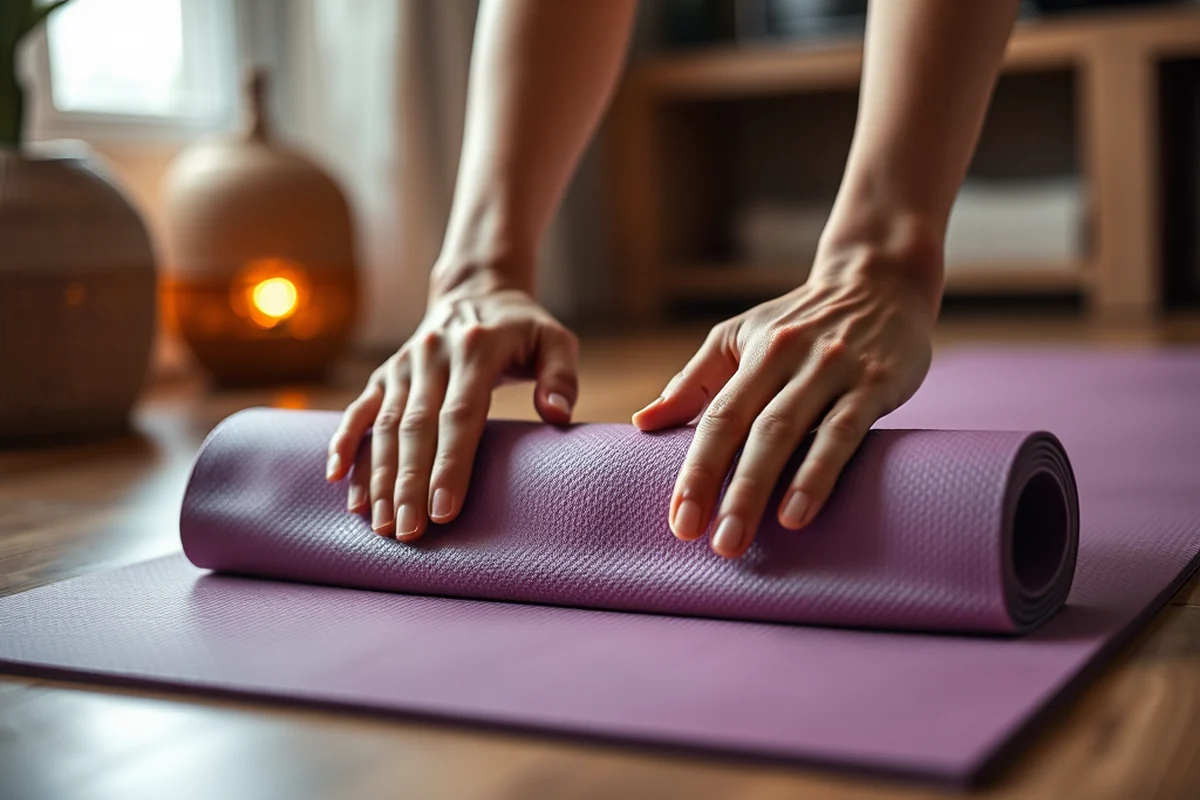
I used to think that cardio required a machine or a trainer, but that’s not true. Bodyweight exercises like burpees, mountain climbers, and jumping jacks are all you need to get your heart rate up. I’ve been doing them for over a year now, and I’m still surprised by how much I can do with just my own body.
One of my favorite routines is a combination of burpees, high knees, and jump squats. I do each for 30 seconds, rest for 15, and repeat. It’s simple, but it works. I’ve noticed that my stamina has improved, and my heart feels stronger with each session.[3]
I’ve also learned that bodyweight cardio can be modified for any fitness level. If you’re just starting out, you can do modified burpees with your knees bent or skip the jump in jump squats. As you get stronger, you can add more intensity. It’s a great way to build strength and endurance without the need for equipment.
Your body is the most powerful machine you’ll ever own — use it.
Related: Cardio training with jump rope
How to Time Your Cardio Routines for Maximum Effect
I used to think that doing cardio for 30 minutes straight was the only way to get a good workout. But now, I know that short, high-intensity intervals can be just as effective. I’ve been experimenting with different timing strategies, and I’ve found that the best results come from alternating between short bursts of effort and brief periods of rest.[4]
For example, I do a 30-second sprint, then rest for 15 seconds. I repeat this for 10 rounds, and I’m already breathing heavily. It’s not about the duration — it’s about the intensity. I’ve found that this method keeps me motivated and helps me avoid burnout.
I’ve also learned that timing your workouts with your energy levels is important. I do my most intense workouts in the mornings, when I feel most alert. In the evenings, I focus on slower, more mindful routines. This helps me stay consistent and avoid overtraining.
Invest in a simple timer or use your phone to track your intervals. It helps you stay on track and ensures you’re not overworking or underworking.
“I used to think that cardio required a gym membership or a running shoe.”— Knee Friendly Cardio Routines editors
Related: Cardio routine for heart health
The Role of Music in Home Cardio Workouts
I used to think that music was just a distraction. But I quickly realized that the right playlist can keep me going through even the toughest intervals. I’ve found that high-energy songs with a strong beat help me stay in rhythm and push through fatigue.
I’ve created a few different playlists for different workouts. For high-intensity sessions, I go with heavy rock or electronic music. For more mindful workouts, I play calm, ambient tracks. The right music helps me stay focused and energized.
I’ve also noticed that music helps me track my progress. When I listen to the same song during a workout, I can hear the difference in my performance over time. It’s a small detail, but it makes a big impact.
Related: Cardio exercises with jump rope
Why You Should Track Your Progress at Home
When I first started doing home cardio, I didn’t keep track of my progress. I just did the workouts and hoped for the best. But after a few weeks, I realized that I wasn’t seeing any real changes. That’s when I started tracking — and that’s when things started to shift.
I began using a simple log to track my workouts, the time I spent, and how I felt after each session. I also started measuring my heart rate and noting any changes in my stamina. It’s amazing how much more consistent I became when I could see my progress in writing.
Tracking your progress also helps you stay accountable. When I see the numbers, I’m more likely to push myself harder. It’s a small change, but it makes a huge difference in long-term consistency.
Related: Cardio exercise jump rope
How to Stay Motivated When You’re Alone
One of the hardest parts about doing cardio at home is staying motivated when no one is watching. I’ve missed workouts before, not because I didn’t want to, but because I didn’t feel like anyone was checking in on me. That’s when I realized that motivation doesn’t come from others — it comes from within.
I started setting small, achievable goals for myself. For example, I would aim to do three workouts a week, or to increase the number of burpees I could do in 30 seconds. I would write these goals down and check them off as I achieved them. It was a small ritual, but it helped me stay focused.
I also found that having a routine helped. I would wake up at the same time each day, do my workout, and then move on with my day. Over time, this became a habit, and I no longer felt the need to check in with anyone else to stay on track.
Motivation isn’t about others — it’s about showing up for yourself.
Related: What are the best cardio exercises for belly fat
How to Overcome Plateaus in Home Cardio Workouts
I remember a time when I stopped seeing results. I had been doing the same routine for months, and my body didn’t seem to be responding. At first, I felt discouraged. But then I realized that I needed to change things up.
I started incorporating new exercises into my routine. Instead of doing the same burpees and mountain climbers every time, I tried adding push-ups, planks, and even dance moves. It kept things interesting and helped me break through the plateau.
I also started tracking my heart rate more closely. I realized that I wasn’t pushing myself as hard as I thought I was. By adjusting my intensity, I started seeing improvements again. It’s a reminder that even when progress stalls, there are always ways to keep moving forward.
🐣 Beginner
Start with low-impact moves like marching in place, seated leg lifts, and slow squats — no running or jumping required.
💰 Budget
Use what you already have — your body, a towel, and maybe a chair — to create a full cardio workout with no cost.
⚡ Fastest
Try a 20-minute HIIT routine with intervals of 30 seconds of work and 15 seconds of rest — you’ll be done in no time.
🔥 Advanced
Challenge yourself with complex moves like burpees, box jumps, and kettlebell swings — if you have access to equipment.
🔄 Maintenance
Stick to low-impact, long-duration cardio like walking in place, cycling in place, or yoga-based flows to stay active without overexerting.
| The mistake | Why it happens | The fix |
|---|---|---|
| Doing too much too soon | Jumping into intense workouts without warming up or building a base can lead to injury and burnout. | Start slow, with short, low-intensity sessions, and gradually increase the duration and intensity over time. |
| Ignoring rest days | Overtraining can lead to fatigue, injury, and a loss of motivation. | Plan your workouts in advance, and include at least one or two rest days each week to allow your body to recover. |
| Using improper form | Poor form can lead to strain on your joints, muscles, and even your back. | Watch tutorials or use mirrors to ensure you’re performing each exercise correctly. Start with modified versions until you feel comfortable. |
| Neglecting hydration | Even at home, you can easily forget to drink water during your workout, leading to dehydration. | Keep a water bottle nearby and take sips before, during, and after your workout to stay hydrated. |
Cardio Exercises In Home
Common Questions
Can I do cardio at home if I have no equipment?
How long should my home cardio sessions be?
Can I do home cardio if I have a knee or back injury?
How often should I do home cardio?
References
- Take advantage of at-home workouts | BCM (bcm.edu)
- Workout on Your Own • The Powerhouse - Beloit College (beloit.edu)
- How to Keep Moving Wherever You Are | Fitness & Recreation Center (bu.edu)
- Physical Activity - CalFresh - CA.gov (calfresh.dss.ca.gov)
Cite this guide
Knee Friendly Cardio Routines (2026). Cardio Exercises In Home. https://mildwalk.com/cardio-exercises-in-home/
Feel free to cite or share this guide.